Posts
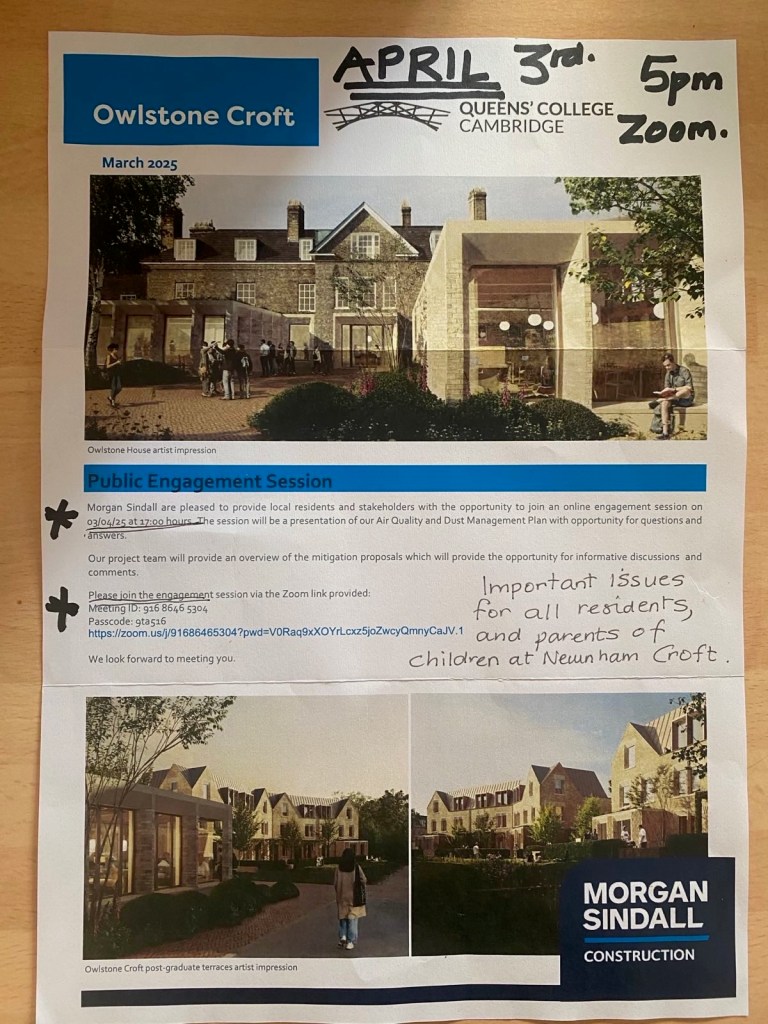

Queens’ construction traffic plans — deadline for comment is 12 February
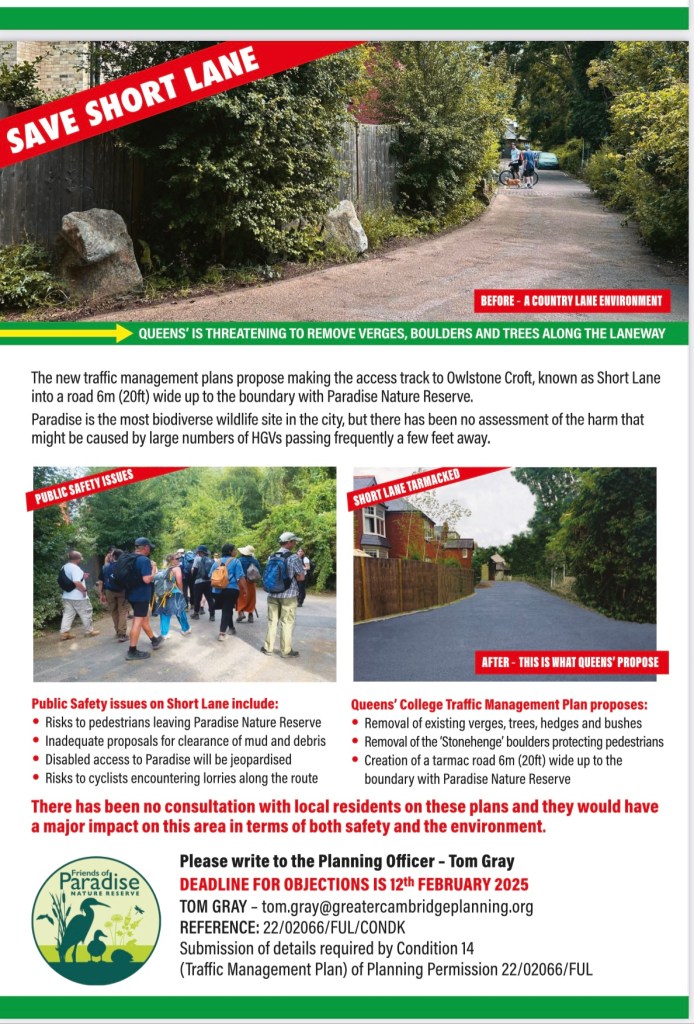
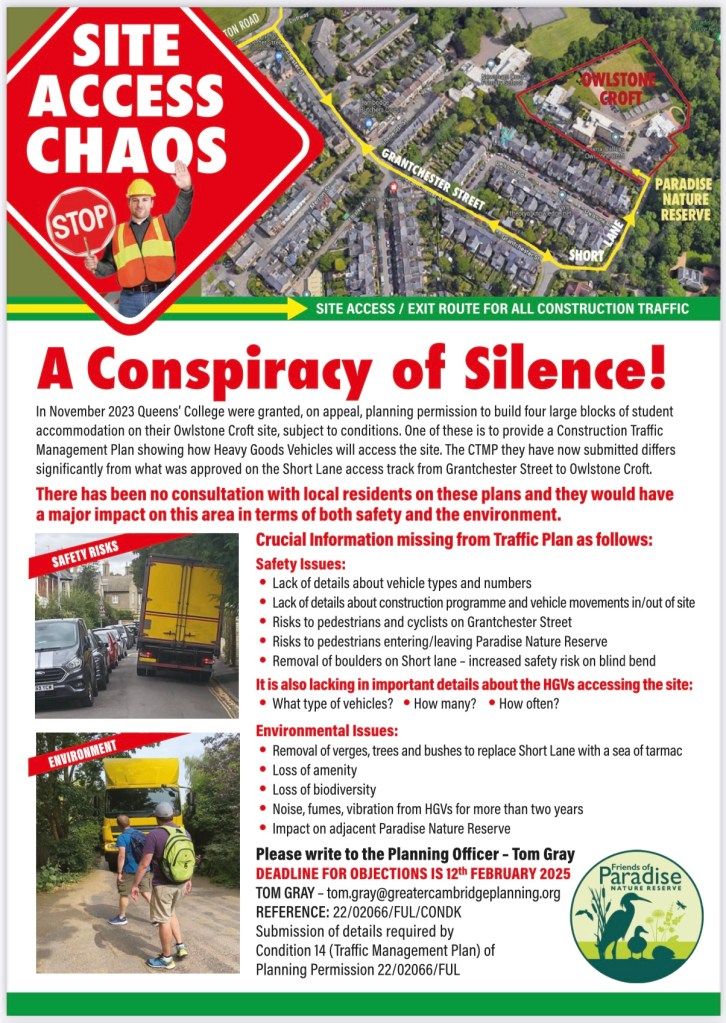
Below is a copy of the letter sent by our Chair. If you agree, please use your own words to send the same message to the Principal Planning Officer, Greater Cambridge Shared Planning, who is handling this matter. Email address is tom.gray@greatercambridgeplanning.org
Subject: 22/02066/FUL/CONDK Submission of details required by Condition 14 (Construction Traffic Management Plan)
Dear Tom Gray,
I am writing to you from Friends of Paradise Nature Reserve to object to Queens’ traffic plans for access to Owlstone Croft along Short Lane.
These plans involve widening the Short lane track to 20 ft to accommodate the heavy vehicles and cranes needed for the proposed development, by obliterating the verges, trees, and shrubs, and boulders placed there for the safety of pedestrians.
These are new plans, not included in the previous application, and they would therefore need a new planning application to approve them. No assessment has therefore been made of the negative impact of having what would become a main two way road adjacent to Paradise nature reserve.In 2021 an ecological report found that the reserve has the highest biodiversity count of any green space in Cambridge, and this would be put at serious risk from air and noise pollution. A proper ecological assessment needs to be made.
From surveys carried out we know that hundreds of people walk this iconic quiet rural route every day from the City to Grantchester , and to have a dangerous road at this point , with blind corners and fast traffic , would be a serious health and safely issue: the Local Highways authority has deemed the plan to be unsafe and unworkable as has the consultant from Railton TPC Limited commissioned by South Newnham Neighbourhood Forum.
Widening Short lane would have a devastating impact on the Reserve, the Community, and the whole Green river corridor and the wider community. The ecological vandalism would be irrevocable and would despoil this beautiful conservation area for now , and for future generations.
We would also add that previous statements by Turleys maintained that there was no problem for emergency vehicle access along Short lane, and indeed there never have been any access problems of this kind. However they are now claiming that the 20 ft width is necessary for emergency vehicle access.
We ask that you refuse to discharge this Condition and request that a new planning application be made.
Best wishes
Pam Gatrell
Chair of Friends of Paradise.
Save Short Lane — write to the planning officer now
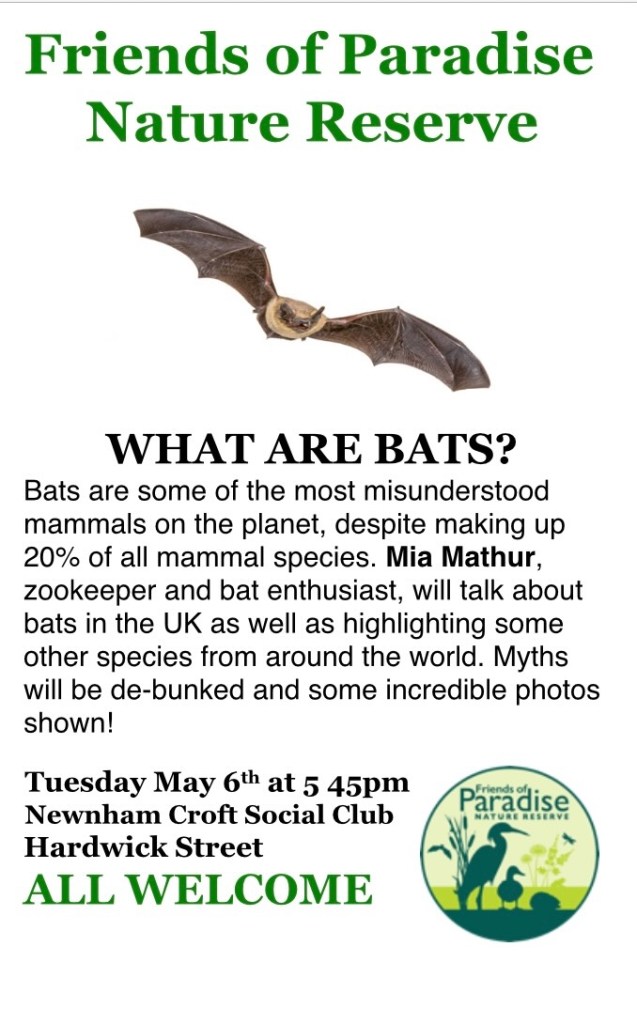
Two new species of bat in Paradise
We’re pleased to say that two new species of bat have recently been confirmed in Paradise, bringing the total to 8. These are 6 Nathuseus’ Pipistrelle and Barbastelle bats.
Nathusius’ pipistrelle is a rare bat in the UK, though records have increased in recent years. It is a migratory species, and most bats are encountered in autumn, although some do remain all year and breed in the UK.
It is similar in appearance to, but slightly larger than, the much more commonly found common and soprano pipistrelles, and the fur on its back is longer, sometimes giving a shaggy appearance. Head & body length: 46mm – 55mm; Forearm length: 32mm – 38mm; Wingspan: 228mm – 250mm; Weight: 6g – 16g. Colour: Fur reddish-brown, occasionally with frosted tips on the belly. The ears, membranes and face are usually very dark. Nathusius’ pipistrelle feeds on medium-sized flying insects such as aquatic flies, midges, mosquitoes and caddis flies.
The scientific name of the Nathusius’ pipistrelle is Pipistrellus nathusii.
Source: Bat Conservation Trust: https://www.bats.org.uk/about-bats/what-are-bats/uk-bats/nathusius-pipistrelle
The barbastelle is a scarce bat that lives in woodland and forages over a wide area. It has a distinctive ‘pug-like’ appearance because of its upturned nose. Length: 4-5.5cm; Wingspan: 26-29cm; Weight: 6-13g; Average lifespan: up to 23 years.
The barbastelle has long and silky fur that is blackish-brown in colour, but with white tips. It has rounded ears that meet on the forehead, and a short, upturned nose, giving it a pug-like appearance.
An elusive bat, the barbastelle lives in woodland and roosts in crevices in trees. All UK bats are nocturnal, feeding on midges, moths and other flying insects that they find in the dark by using echolocation. Barbastelles forage over a variety of habitats and are fast and agile fliers. They mate in autumn, hibernate over the winter (usually underground), and give birth to a single pup in summer.
The scientific name Barbastella comes from the Latin for ‘star beard’ and is a reference to the white tips present on the barbastelle’s fur.
Source: The Wildlife Trusts https://www.wildlifetrusts.org/wildlife-explorer/mammals/barbastelle-bat
Dark Skies: come hear about light pollution
Anna Levin gave a talk to Friends of Paradise about the very important theme of light pollution, and this is another relevant talk on Friday 24 January at 7:30p at the Friends’ Meeting House.

Come to an important talk about Coton Orchard, Tuesday 14 Jan 6pm

Please come to hear the history of this beautiful and ancient local orchard, part of our heritage and an important local green space, but now under threat.
Fairy Doors in Paradise
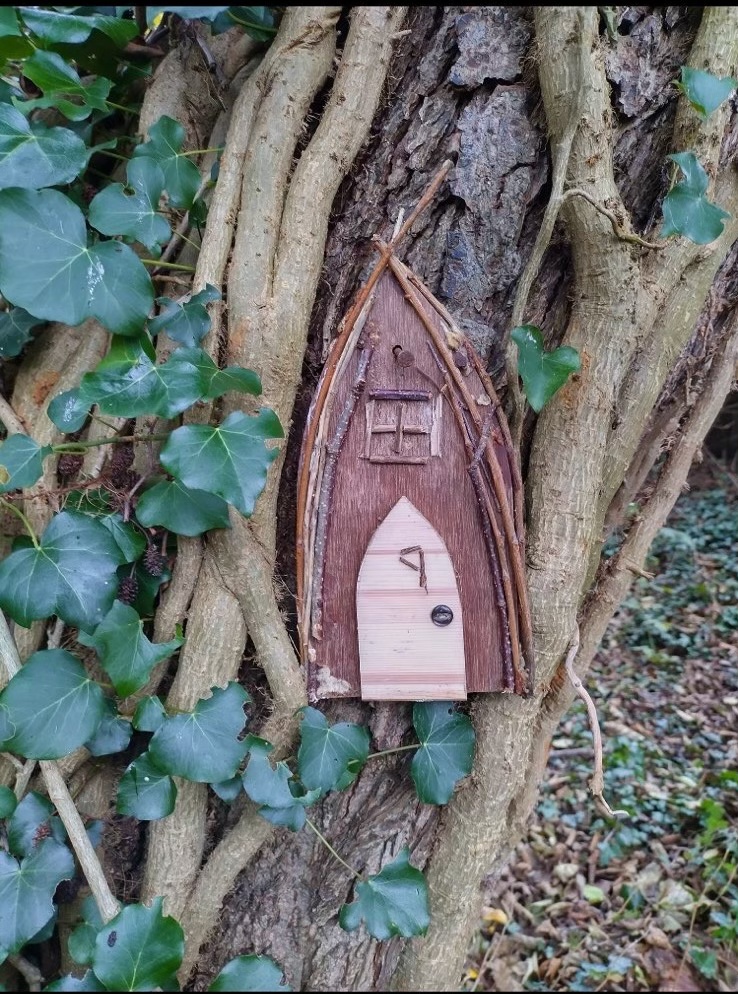
Please come to find these new Fairy Doors, which will be in Paradise until the end of February.

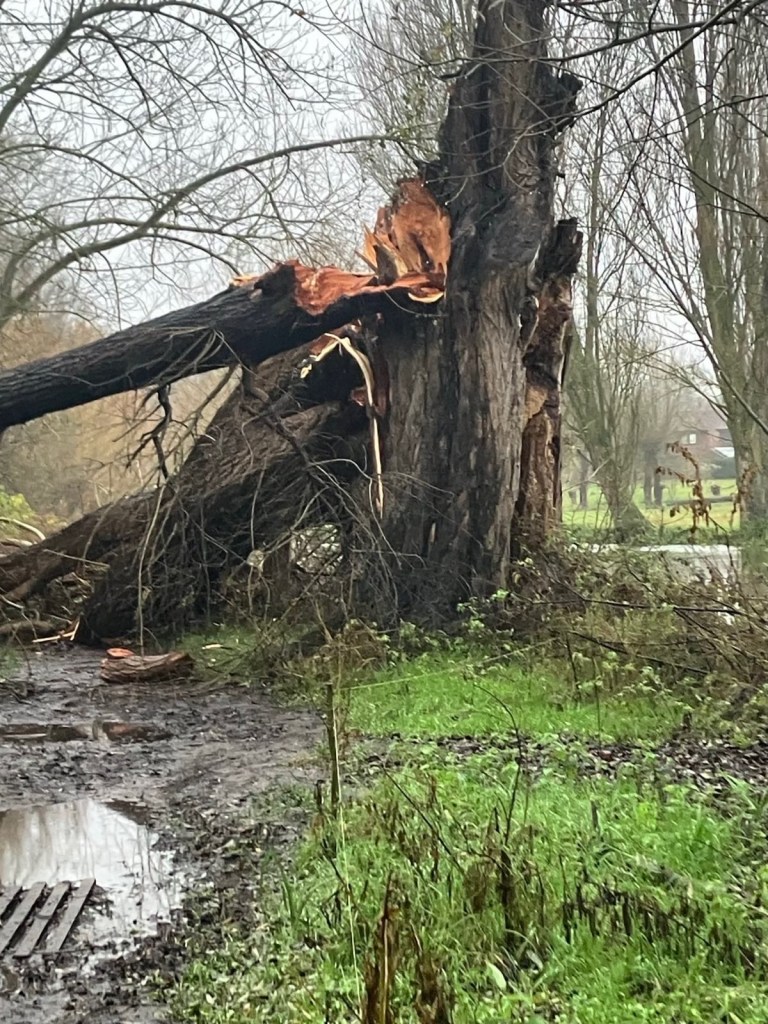
And there is a message from the City Council’s Tree Officer, Kenny McGregor, to say that the willows that fell in the storm (see photos) will be moved shortly and will be stacked to create habitats near the river. Thank you.

 Friends of Paradise Nature Reserve
You must be logged in to post a comment.